
Contact STM today to discuss tennis court maintenance solutions and find out how we can help keep your court performing at its best.
Maintaining a tennis court is an ongoing responsibility. The surface you choose plays a major role in how much maintenance is required, how often work needs to be carried out, and how long the court remains in good condition. Whether the court is used by a school, sports club, community facility, or at a private home, the right surface can reduce long-term maintenance demands and disruption.
In the UK, macadam and artificial grass are two of the most common tennis court surfaces. From a maintenance perspective, they perform very differently over time.
| Factor | Macadam (Hard Court) | Artificial Grass |
|---|---|---|
| Routine Maintenance | Requires regular sweeping, pressure washing, and treatment for moss and algae, particularly in shaded or damp areas.
|
Requires light brushing to keep fibres upright and removal of debris. Less frequent cleaning is needed. |
| Long-Term Repairs | Cracks can form due to ground movement and temperature changes, often requiring patch repairs or resurfacing every 5–10 years.
|
Designed to cope with heavy use with minimal structural damage. Occasional infill top-ups or localised repairs may be needed. |
| Weather Impact | Performs well in most conditions but surface deterioration can accelerate in extreme temperatures.
|
Performs consistently in wet and dry conditions with less weather-related wear. |
| Surface Comfort | Hard surface increases stress on joints and increases risk of injury during slips or falls. | Softer surface reduces joint impact and is more forgiving during falls. |
Macadam tennis courts require planned maintenance to remain safe and playable. Over time, the surface can crack as the ground beneath moves or expands. These cracks allow water to penetrate the surface, which accelerates deterioration and increases repair costs.
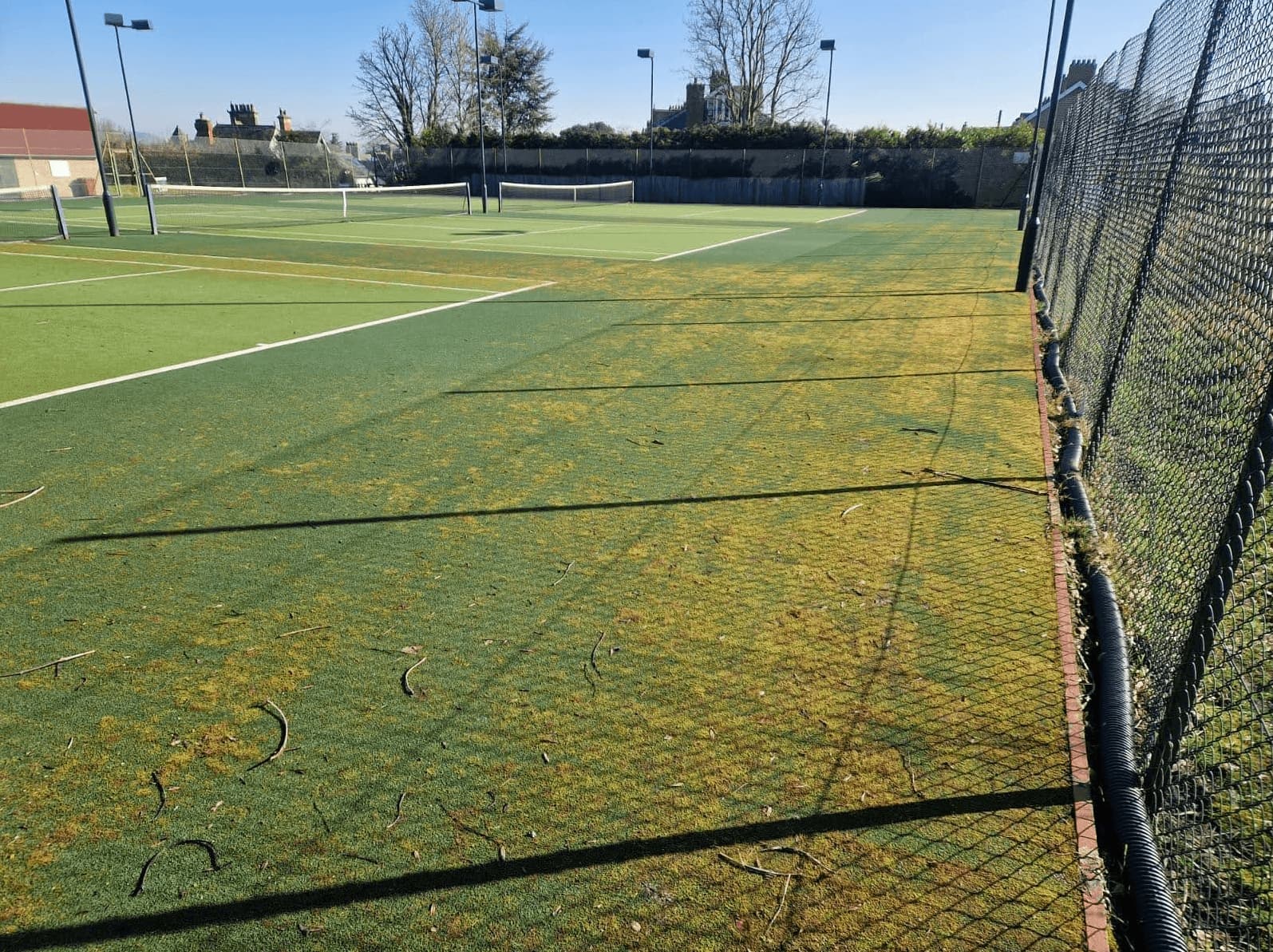
Moss and algae growth is a common issue, especially on courts surrounded by trees or buildings. This not only affects appearance but also reduces grip, increasing slip risk. To manage these issues, macadam courts need routine cleaning, chemical treatments, repainting of lines, and eventual resurfacing.
Macadam surface demands regular intervention to prevent long-term damage.
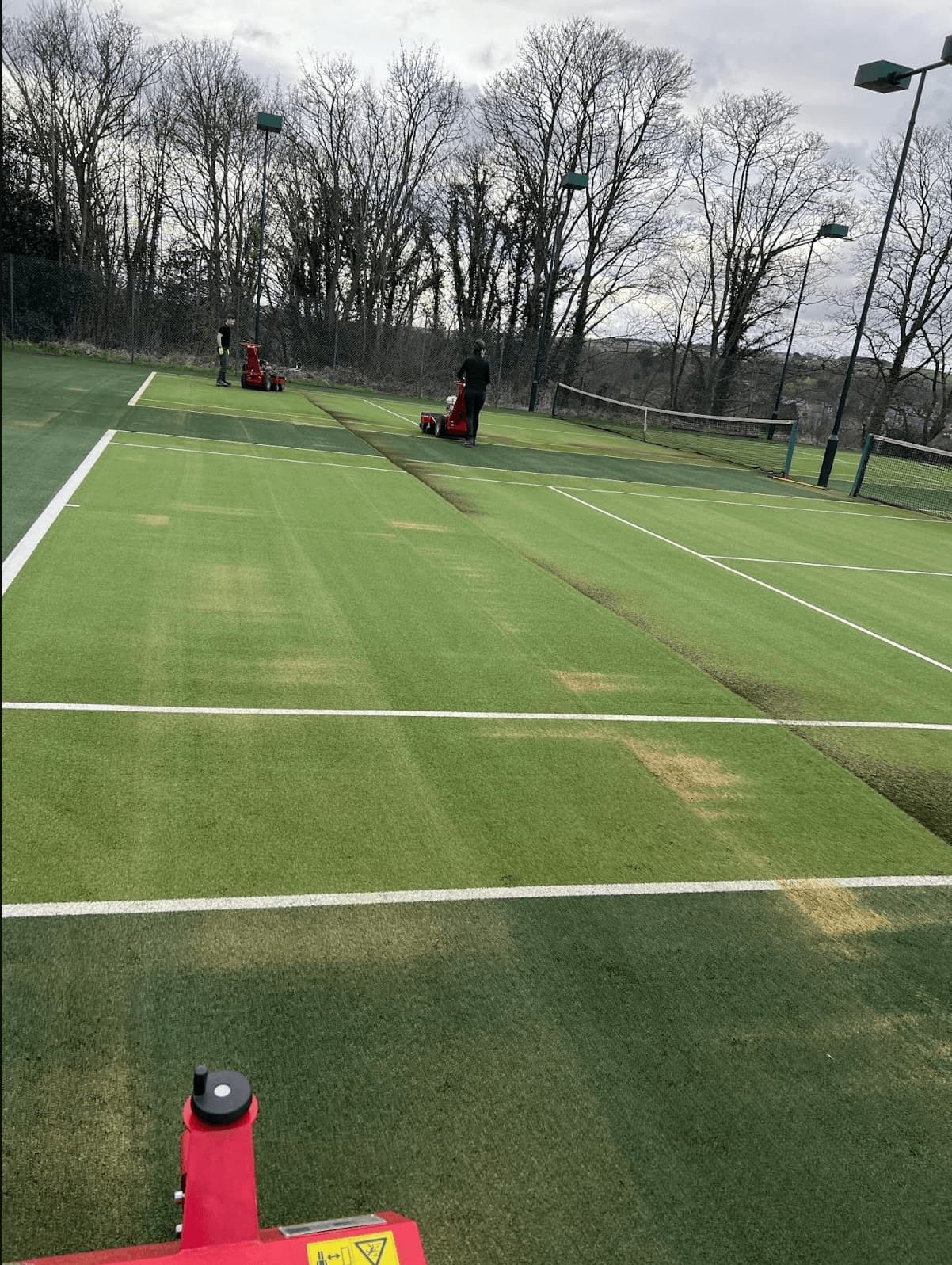
Artificial grass tennis courts reduce day-to-day maintenance demands. The surface does not crack in the same way as hard courts and is less affected by temperature changes. This makes it a stable option for locations with frequent use or limited maintenance budgets.
Maintenance typically involves brushing to prevent fibre flattening, clearing debris such as leaves, and periodic deep cleaning to maintain performance and drainage. When these tasks are carried out as part of a planned maintenance programme, artificial grass courts retain consistent play quality and appearance for many years.
Artificial grass surface supports long-term use with fewer disruptive repairs.
Preventative maintenance extends surface lifespan. Ignoring small issues on any tennis court surface leads to larger problems over time. For macadam courts, this often means cracks spreading and surface failure. For artificial grass, it can mean compacted infill or flattened fibres.
Regular inspections, cleaning, and minor repairs help maintain performance and reduce the need for major works. Artificial grass courts benefit particularly well from preventative maintenance because issues can often be resolved without resurfacing.
Tennis court usage influences maintenance needs. Schools and community facilities often experience heavy daily use, which increases wear. Clubs may prioritise consistent play characteristics, while private owners often want a surface that stays clean and presentable with minimal effort.
Artificial grass is well suited to all of these settings because maintenance requirements are predictable and manageable. This makes it easier to budget for upkeep and avoid unexpected closures.
Tennis court maintenance should be a key consideration when choosing or upgrading a surface. While macadam courts can perform well, they require regular cleaning, repairs, and resurfacing to remain safe and playable. Artificial grass offers a lower-maintenance alternative that delivers consistent performance, improved comfort, and long-term durability.
Tennis court surface determines maintenance workload and lifecycle cost.
For anyone responsible for maintaining a tennis court, artificial grass provides a practical solution that reduces disruption and supports reliable use over time.
Contact STM today to discuss tennis court maintenance solutions and find out how we can help keep your court performing at its best.